
Media Training 101: When the Camera Turns On, You Either Own the Moment or It Owns You
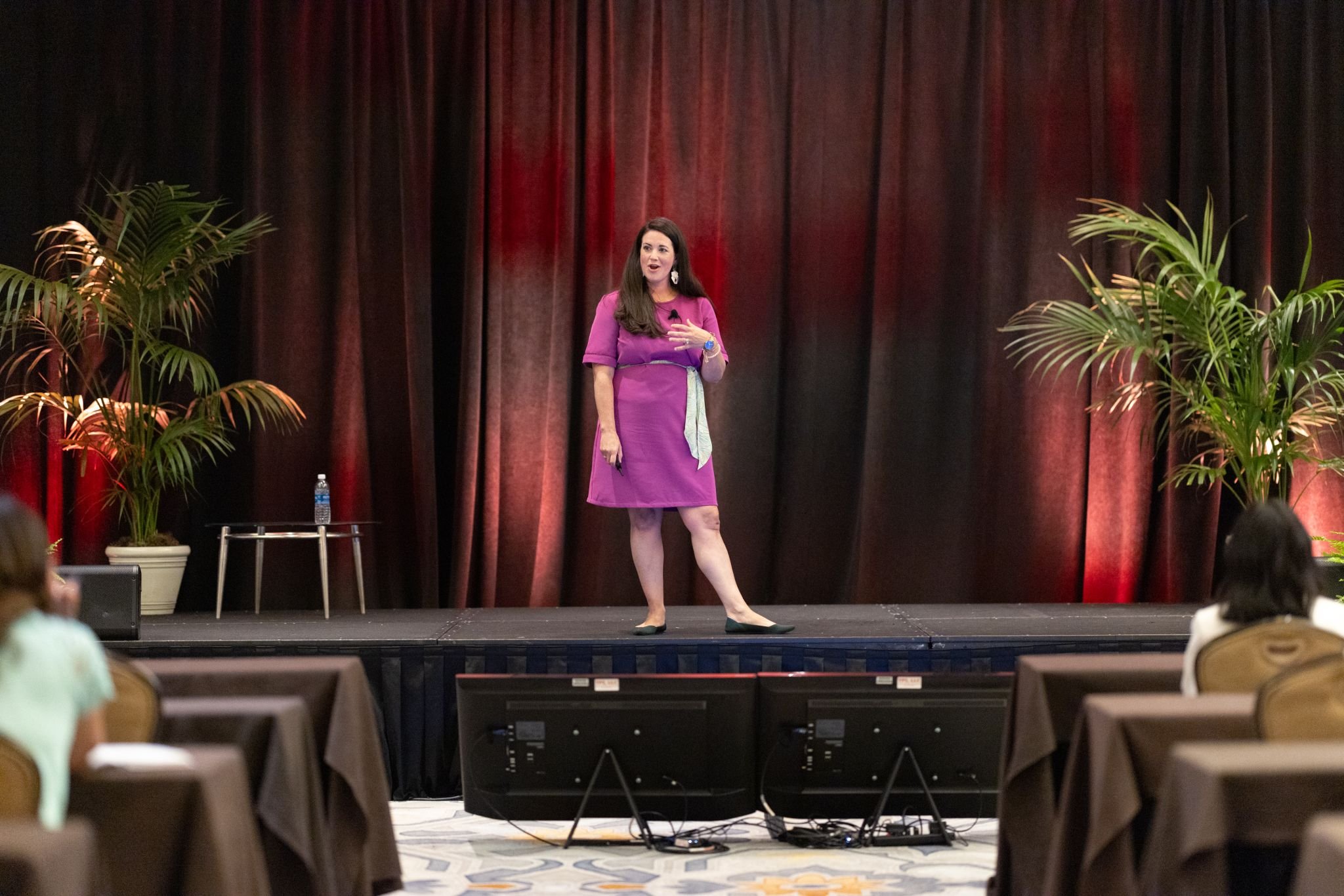
Leah takes center stage, delivering insight to AIM Conference attendees about the do’s and don’ts when it comes to media training 101.
We caught up with Leah Ekmark Williams, APR, a communications strategist and president and CEO of Dala Communications, who is regularly called upon to lead media relations training, proactive communications strategy, and crisis preparedness sessions for executive teams across many industries. She recently spoke directly to multifamily owners and property managers during her session on crisis communications strategy at the Apartment & Innovation Marketing (AIM) Conference. Here's what she wants every leader to know before the camera turns on.
Picture this. You’re on a job site (or office building) and when you open the door, a reporter is standing there, mic in hand and a camera in your face throwing questions at you rapid fire about something you have no knowledge of, not to mention you don’t know what to say or who to contact first. This “scenario” is not just a scenario – it’s very real and something that happened to one of my clients.
The moral of the story? EVERY organization has a spokesperson. Unfortunately, not everyone knows they will be the spokesperson until a camera is put in their face. Often times, the person you see on camera is not the authorized, primary spokesperson but they are put on the spot and can become the face of a news story. I can tell you that one client wished they could go back in time and arm that individual with a simple statement followed by clear instructions of their chain of command for media scenarios like this.
Over the years, I've been called in to lead media training sessions to address both proactive and reactive media scenarios like the one I mention above, training executive teams and communications departments across many industries spanning education, fintech and healthcare to commercial real estate, construction and manufacturing. I’ve even been tapped by the full leadership structure at a higher education institution, including their board of rrustees, college deans, president, and communications staff. These aren't casual lunch-and-learns. They're high-stakes sessions built to help teams prepare for the moment when a reporter shows up uninvited, a crisis breaks before 8 a.m., or a board member says something on camera they can't take back. The training courses are also focused on helping spokespersons better understand how to maximize external interview and speaking opportunities with intentional messaging development to better position their company or brand.
I get asked to facilitate these sessions because media training isn't just about talking points. It's about command — knowing who controls the narrative and making sure it's you.
Whether I'm working with a college board, a corporate C-suite team, a multifamily development group or a nonprofit leadership team, the same gaps show up every time. Here are five principles I drive home in every session:
1. You are always on the record.
"Off the record" is a myth most executives learn the hard way. If you said it — in an interview, a hallway conversation, in an email, or even a private text — it can be used. Train yourself to communicate as if a camera is always rolling. And remember, a mic (or Zoom call) is always “hot” until it’s turned off or your laptop is closed (PS, don’t assume that mute button is working – we’ve all seen the news stories about the exec who thought the mic was muted during their Zoom call, but it wasn’t).
2. Your audience is not the reporter.
The reporter is your messenger, not your target. Everything you say should be crafted for the constituent, business owner, viewer at home, parent, donor, or community member reading the story — not the journalist in front of you. Know your audience before you decide what to say.
3. Stay on message.
Develop two or three core messages and return to them relentlessly. The most effective spokespersons don't wait for the "right" question — they bridge back to what they need the audience to hear. This comes with practice and politicians tend to be masters at this - start paying attention to their TV interviews and watch/listen for those bridging cues.
4. A media ambush is not the time to improvise.
When a reporter approaches a board member at a community event or a camera crew shows up unannounced on a project site, usually a “deer in headlights” scenario ensues with the feature story on the 6PM newscast or a viral social clip. With appropriate media training beforehand, your employees or brand ambassadors will better understand what’s expected of them in this scenario and what they should say or not say. The goal is not to engage; it is to redirect, have a statement ready for ALL employees to refer to for any scenario, and follow the “chain of command.” Preparation eliminates improvisation.
5. In a crisis, silence reads as guilt.
The single biggest predictor of reputational harm is the perception that you don't care. An effective crisis response is a timely, persistent demonstration that you do. That means having pre-approved language, a defined chain of command, and a spokesperson who can deliver a statement with confidence — not panic.
Media training is one of the most underinvested line items in an organization's communications budget, that is, right up until the moment it isn't. The executives who show up prepared are the ones who walk away with their reputations intact.
If your leadership team hasn't been through a media training session, it's time to change that. Reach out to schedule media training or to conduct a crisis communications audit today.
Leah Ekmark Williams, APR, is the president and CEO of Dala Communications and a communications strategist with 20 years of experience in crisis communications, media relations, and executive positioning. She is available for keynotes, workshops, and executive training sessions.