
Three Things we Told a Room Full of Fundraisers About Thought Leadership (And Why It Matters Right Now)
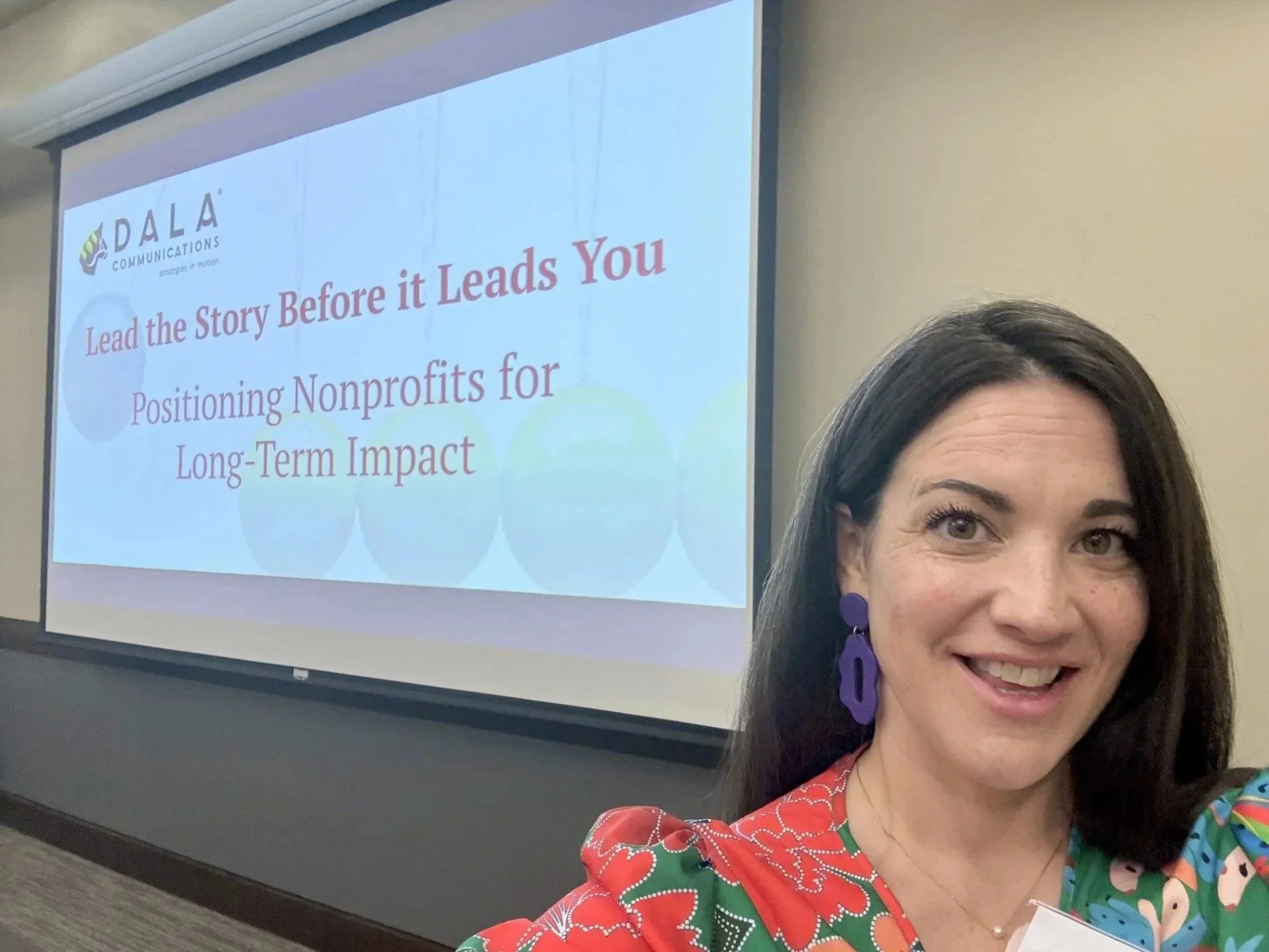
Last week our president, Leah Williams, APR, spoke at Association of Fundraising Professionals (AFP) annual Philanthropy in Action 2026 conference, with a session called: Lead the Story Before it Leads You: Positioning Nonprofits for Long-Term Impact. The room was full of development professionals, executive directors, and nonprofit leaders who are navigating real pressure right now thinking about funding uncertainty, leadership transitions, mission shifts.
Leah’s message was simple: the organizations that come out of those moments strongest are the ones that were already in the room, communicating, before the moment arrived.
If you weren’t able to attend, here are three things to think about as to get ahead of the crisis game:
1. Thought leadership is infrastructure, not a one-off campaign. It's the ongoing discipline of consistently showing up externally so when a difficult moment hits, your stakeholders already know who you are and trust that you can handle it. Build the presence before you need it, using various communications channels like op-eds, earned media, speaking and awards or using your executive's LinkedIn to amplify your organization's consistent public voice. And don’t forget to engage your board in your thought leadership campaign to help you tap into their spheres of influence too - they are your biggest brand ambassadors.
2. Your internal audience is your first audience. Board and staff alignment on messaging has to happen before anything goes external. When internal stakeholders are confused or caught off guard, that confusion travels and the game of telephone starts. But if they are informed and equipped with messaging and talking points, they become your most credible word-of-mouth network. A good cheat sheet with talking points, impact stories, and a clear CTA goes further than most organizations realize.
3. A well-managed crisis is a fundraising asset to help you carry the narrative forward post-crisis. The organizations that weather change with transparency and then tell that story clearly after the fact, give funders a reason to double down. Your resilience narrative is your next case for support. Don't just survive the shift. Position it.
We wrote a longer piece on this exact topic earlier this year that goes deeper into the strategic framework behind proactive thought leadership positioning. If this resonated, read it here.
And if your nonprofit is looking for messaging support, crisis communications training, media training or just communications and PR strategy in general, let's talk.