
Three North Texas Leaders Take on Access in Youth Sports — and Why It Matters for Every Employer in the Region
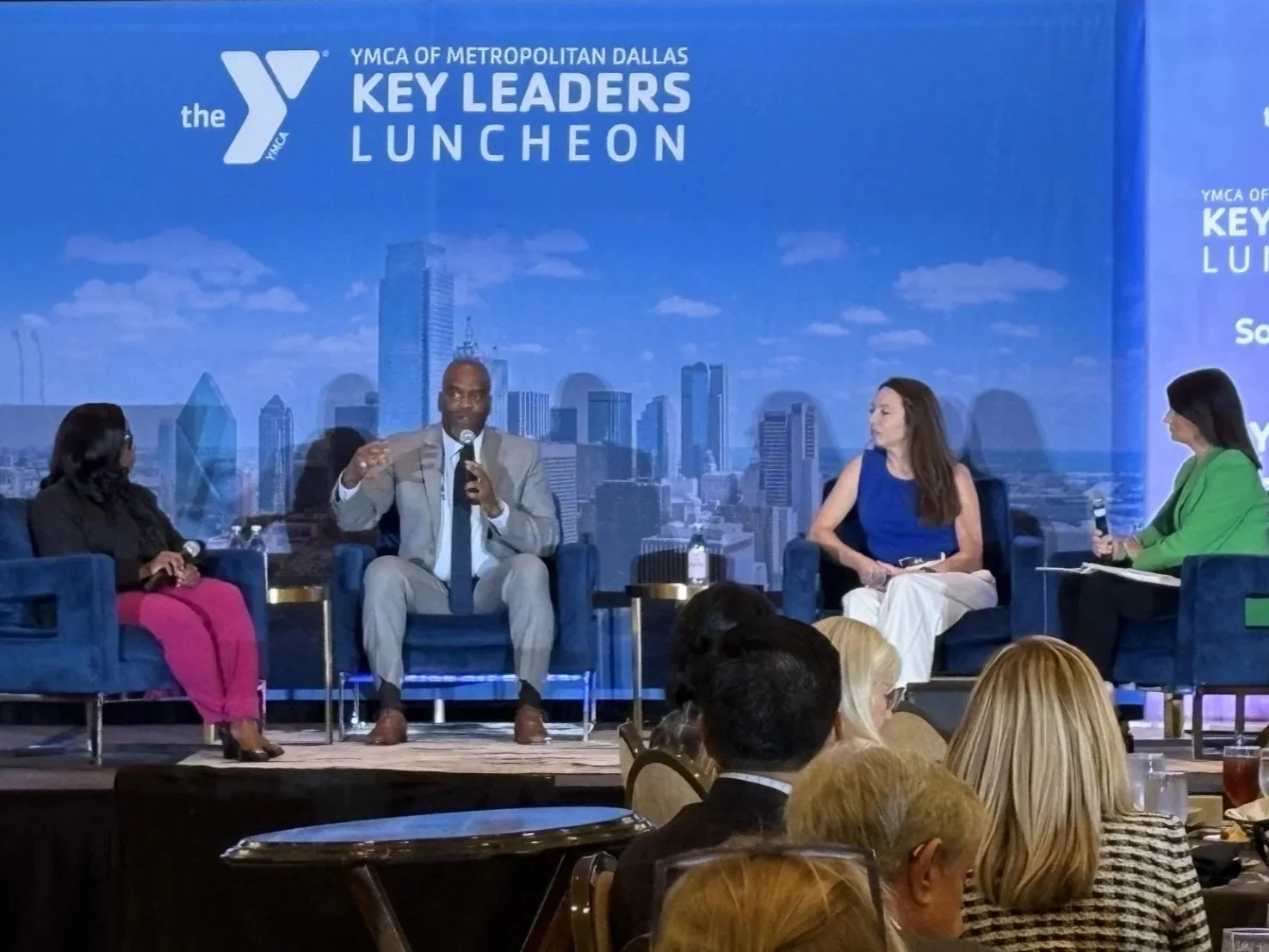
Ninety-four percent of women in C-suite positions played a sport, and more than half competed at the college level. That finding comes from an EY and espnW survey of senior female executives, and it was cited during the YMCA of Metropolitan Dallas' 2026 Key Leaders Luncheon on Oct. 8 which the Dala Communications team recently attended.
The number rings true for us. Every member of Dala's leadership team played a sport.
It also framed the question the Y put to the room. If sports help develop the people who go on to lead companies, then who gets the chance to play and the access is a workforce issue as much as a youth development one.
The Dala team joined our nonprofit client YMCA Dallas alongside other North Texas business and community leaders for the luncheon, Beyond the Ball. FOX 4's Shannon Murray moderated a panel of three leaders who see youth sports from different vantage points:
Sophia Ulman, Ph.D., division director of the Movement Science Lab at Scottish Rite for Children
LaDondra Wilson, vice president of social responsibility for the Dallas Wings and executive director of the Dallas Wings Community Foundation
Kendall Miller, athletic director for Plano ISD
Here are a few interesting takes from the panel regarding the economic return on youth sports, the barriers to access, and what business and community leaders can do about both.
The return: leadership skills that start early
Wilson put the executive research in practical terms. In the same survey, nearly three-quarters of respondents said a sports background can help accelerate a woman's career. Teamwork, collaboration and leadership are learned on a team long before they appear on a resume.
That thinking shapes how the Dallas Wings Community Foundation runs its programs for girls. Very few participants will play professionally, Wilson said, so its clinics pair basketball skills with goal setting, mental health and exposure to careers in the business of sports.
Miller made the same case from the school side. Often times student-athletes spend more time with coaches than with family, which makes coaches some of the most influential adults in a young person's life. Kids start playing because it is fun, he said, and keeping it that way keeps them on a team long enough to learn sportsmanship and humility.
Ulman added the health and academic evidence. Sports participation is associated with better grades and a lower risk of anxiety and depression.
The barrier: cost
According to the Aspen Institute's Project Play, the average family spent a little more than $1,000 on one child's primary sport in 2024, up 46% from 2019.
That figure covers one sport. Ulman noted that a child who plays two or three, as researchers now recommend, can cost a family $1,500 to $2,000 a year, before counting siblings or equipment.
For families below the poverty line, she said, CDC data show only about one in three children plays any sport at all, recreational or club. That data illuminates the fact that a certain demographic population is getting more access.
Ulman credited the Y with helping families understand what resources exist and what they cost, which is one reason Scottish Rite for Children partners with the organization.
What the panel asked of the room
Miller closed with a point people outside the state may miss. Texas public schools carry much of the load that families elsewhere pay for themselves.
Districts employ licensed athletic trainers full time, and coaches are full-time teachers. A student who plays football, then basketball, then baseball at a public school typically does not pay a fee to participate.
Supporting public education is supporting youth sports.
Wilson's emphasized the importance of investing in the nonprofits doing this work, the Y first among them. The Wings could hold every camp and clinic in their own facilities, but they choose to take them into the community.
What this means for business and community leaders
Three takeaways stood out to our team.
Youth sports access is a workforce issue. The Y designed this luncheon for employers. The teamwork, resilience and leadership that North Texas companies hire for are being developed now on courts and fields, but only among the children who can get onto them.
Funding follows a clear case. Dala's nonprofit practice supports the Y's fundraising, and this panel reinforced why their work in our communities matters. Scholarships, equipment and facility time are funded when the need is stated clearly and supported by data like the figures above.
One topic never came up on stage: NIL (name, image and likeness). The focus was rightly on access. Still, the "whole person" every panelist described now includes a public one. Schools talk to athletes about mental health and, increasingly, financial literacy. Almost no one teaches brand literacy: how to present yourself, handle an interview, and respond when a mistake becomes public. Our NIL personal branding and media training workshops do with high school athletes. Developing your personal brand and what a student-athlete stands for also aligns with leadership skills, something all the panelists remarked was a key attribute and result of team sports – leadership development.
While we know a select group of student-athletes go pro, yet every one of them will be looked up online by an admissions officer or an employer. That is the work our NIL and media training practice does with high school athletes, on and off the field, and it belongs in the same conversation as access.
If your school, team or nonprofit is working on any piece of this, we'd like to compare notes. Get in touch with Dala to talk about nonprofit fundraising or NIL personal branding.